Hiroki Fxyma
Kobe University
Exective Summary
– Developed a multivariate abstract shape space (多変量の図形空間)
– Constructed a reproducible stimulus set based on geometric structure

Backgrounds
Crossmodal correspondences in flavor perception
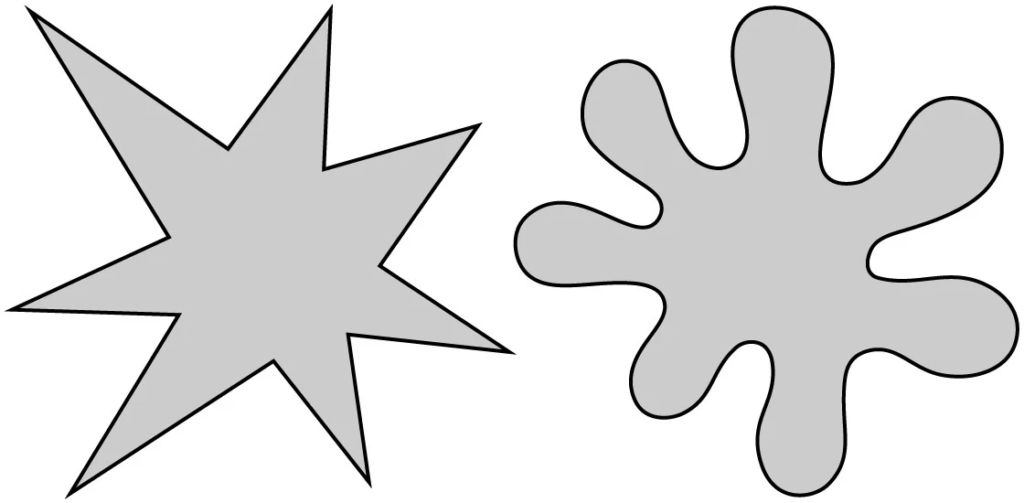
- taste ↔ shape
- sweetness → round
- bitterness → angular
Widely reported — but too simplified
Blind matching experiments with beer flavors (Deroy & Valentin)
- Participants matched flavors to 2D/3D shapes
- No visual or linguistic cues
- Clear perceptual patterns emerged
Findings:
No significant differences between 2D / 3D
Sweetness → round & voluminous shapes
Bitterness → thin & angular shapes
Most studies reduce perception to binary categories
二項分類に還元する傾向
・rounded vs angular
・2D/3D
・thin / voluminous
・forced-choice tasks
・subjective visual labels
>> Multidimensional structure is lost
Conceptual Shift
From categorical binary mapping to representational space
Taste–shape correspondence = distribution in shape space
(not a binary choice)
But, How?
Shape Dataset Construction
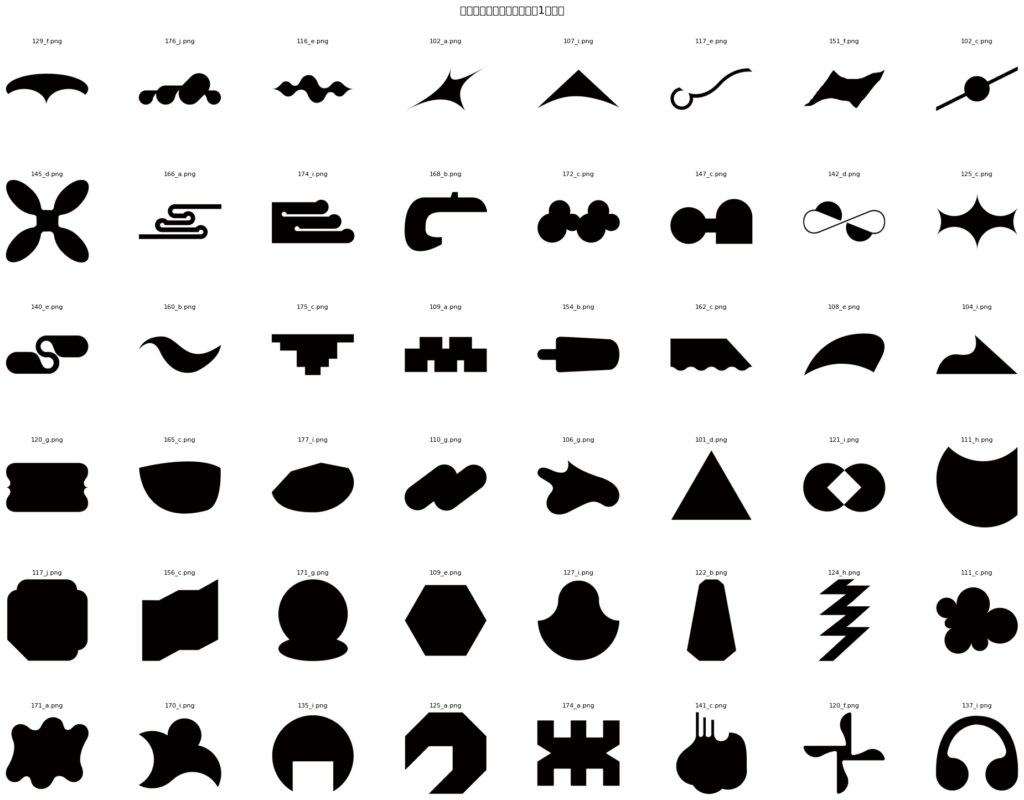
Prepared over 750 abstract shapes (From Clolets gum)

Curated for perceptual clarity
- no holes(穴、空洞)
- no composites(複合)
- no duplicates(繰り返し)
→ pure geometric variation
Step 1: Multivariate Feature Representation(多変量の特徴づけ)
Each shape → 128-dimensional geometric vector
Using WinROOF, each shape was quantified by 128 geometric features, including:
- area and equivalent diameter(面積・直径)
- circularity and convexity(円形度・凸性)
- Feret diameters and aspect ratios(フェレ径・縦横比)
- boundary length and skeleton structure(境界長・スケルトン)
- moment-based orientation features(モーメント特徴)
- ellipse approximations(楕円近似)
- directional and complexity measures(方向性・複雑性)
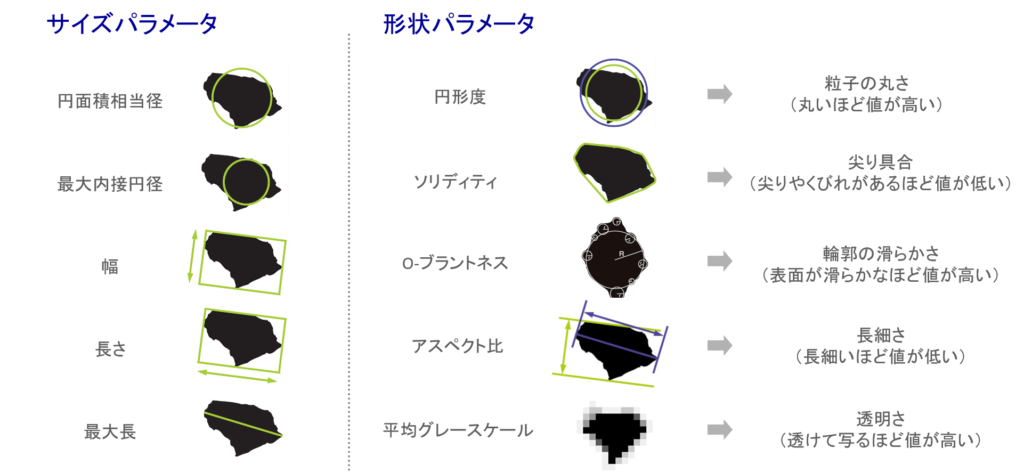
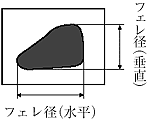
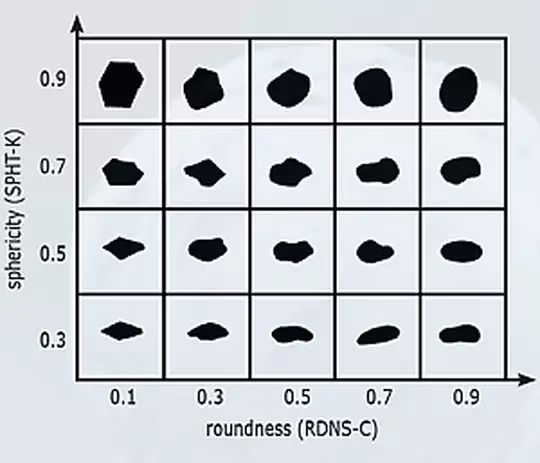
Visual shapes were transformed into quantitative geometric vectors
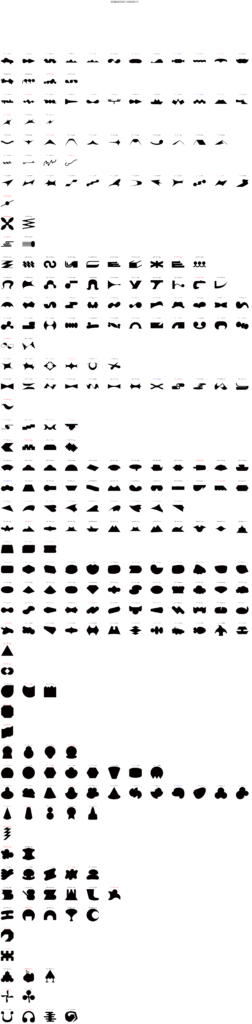
Step 2: Construction of the Abstract Shape Space 図形の空間化(クラスタリング)
- feature standardization
- formation of a high-dimensional geometric space
- hierarchical clustering based on multivariate similarity
Target scale: 48 clusters
Shapes form a continuous representational space, not discrete categories.
Step 3: Selection of Representative Shapes 代表図形の選定
For each cluster:
- The centroid in feature space was computed
- The shape closest to the centroid was selected
Characteristics:
- algorithmic
- unbiased
- fully reproducible
→ 48 representative abstract shapes as experimental stimuli
48 representative
Randamized

Upcomming Experiments(on Feb.12)
Abstract Shape–Based Sensory Evaluation of Coffee
Stimuli
– 48 representative shapes
Coffee samples
– 24 coffees
– diverse origins and processing methods
Participants
Over 10 professional coffee tasters
Phase 1: Shape-Taste evaluation
shape correspondence task
48 shapes presented per coffee
participants select 1st–3rd best matching shapes
Phase 2: CVA sensory form
Cupping Evaluations (Usual task for professionals)
2 sessions × 14 coffees
(total 28 coffees, 4 coffees are the same brand for checking the consistency)
CVA Combined sensory form
Compare the CVA score (taste features) and Shape features
Summary
Core Contribution
From visual categories to representational structures
Traditional approach: shape categories (round vs angular)
Our approach: high-dimensional geometric representation space
Taste–shape correspondence is modeled as a spatial distribution, not a binary choice
Summary
– Developed a multivariate abstract shape space
– Constructed a reproducible stimulus set based on geometric structure
– Reframed taste–shape correspondence as a representational mapping problem
– Provided a foundation for multimodal flavor representation research