目次
Agenda
- Expectations Summary
- Overview of Evolution of Work
- Team Discussion of 3 Generations of Work
- Reports, Discussion, Posting Team Findings
Your Expectations for the Course
- Learn about the workplace, organizational politics, etc.
- Learn skills we can apply to our current activities (clubs, sports, etc)
- Key skills: Negotiations, leadership, group interactions, communications
- Develop knowledge/skills to support interests in entrepreneurship
- Have fun in doing so
- How has work changed over the years?
Ask yourself four questions:
- What do you want most from your first job after graduation?
- What does your employer want from you in your first job?
- What it will take for you to be successful in your work and career?
- Take a leadership perspective: What will it take for all others in the labor force to be successful in their work, careers, and families?
Two Concepts to Keep in Mind
Agrarian Work Systems
e.g., the independent farmer: Families working their own or someone else’s land
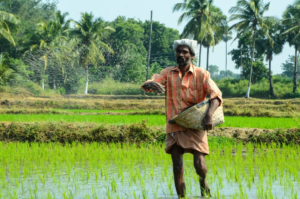
Agrarian: Key Success Factors
Personal Factors
- Hard physical labor; perseverance
- 24-7‖ Farmer’s work never ends
- Family support—work & family tightly coupled
- Jack-of-all-trades:‖ able to make tools & fix machinery
- Ability to adapt to new methods/technologies
External-Institutional Factors:
- good soil, weather, and other natural resources
- good credit—local banks financed the planting of crops
- University extension research & education systems
- Public education for the next generation—ability to move off the farm to new job opportunities!
Craft Work Systems
e.g., the shoemaker or cabinet maker responding to individual, custom orders
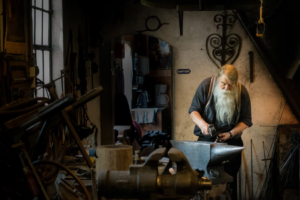
Learn from the Masters: “Masters” teach, then hire, supervise, and pay “apprentices”
What are some modern-day “crafts”?
Craft Work: Key Success Factors
Personal:
- Deep and holistic craft skills
- Access to the craft labor market
- Ability to plan, organize, balance, and complete multiple projects
- Teaching ability
- Access to a master (which hints at nepotism)
- Ability to learn/adapt to changing the technologies
External/Institutional
- Stable technologies and specialized jobs & work systems
- Guilds, craft unions, professional associations
- Ability to protect craft jurisdictions e.g., lawyers; doctors, railroad crafts (favorite was railroad “firemen”)
Mass Production Work Systems & Factories
e.g., the autoworker on the assembly line
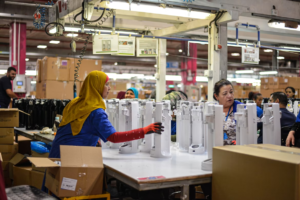
Mass Production: Key Success Factors
Personal
- Physical strength; endurance of repetition (physical & mental)
- Learn to take and/or give orders
- Union membership
- Seniority
External/Institutional
- Large mass markets for standardized goods
- Large pools of capital; big firms
- Good industrial engineering—dividing up the jobs; standardizing tasks; detailed rules; stopwatches…
- Steady, reliable supply of low-skilled workers Organization Man: Wife at home doing family work
- Industrial unions and collective bargaining
- National government set minimum labor standards & laws
Knowledge Work Systems
e.g., writing the code for Harry Potter; designing this building

What are the key success factors for Knowledge workers?
Independent Agent or Organization Man/Women?
How many of you prefer to start your careers as:
A: Independent Agent?
B: Working for a corporation/other organization as an employee?