Research Questions
What are the temporal properties of taste appreciation?
味覚鑑賞はどのような時間的性質をもつか
What are Non-Linear temporal forms like?
線形でない時間形式はどのようなものか
What are the temporal properties of taste appreciation?
味覚鑑賞はどのような時間的性質をもつか
The appreciation of the taste has 3 levels of temporal dimensions:
Physiological and Cognitive level 生理学的・認知的レベル
- Food aversion learning and food preferencelearning 食物嫌悪/嗜好学習
- Ortho-nasal / Retro-nasal レトロネーザル
- Temporal changes in the mouth
- Temperature change due to retention 口中滞留による温度変化
- Shape changes due to mastication (chewing) 咀嚼による形状の変化
- Dissolution by saliva 唾液溶解
- Stirring by the tongue 舌による撹拌
Phenomenological level 現象レベル
Time as a phenomenon means considering the aspect of time that differs from so-called objective time (physical time, natural time, world time, etc.).
一般的な時間とは違う時間相を考える
It is an attempt to discuss the flavor of time as it is told in the personal, first-person narrative, rather than objective or measurable time.
個人的,一人称的な物語として味わいが意味づけられる時間を扱いたい
Is the time structure of the taste appreciation linear? 時間構成は線形か
Linear Temporal Description of the taste
Example 1: (Ordinal) Wine tasting comments by sommeliers
Distinctively rich and balanced, with blackberry, blueberry, mocha, exotic spice, sandalwood, and fresh earth flavors.
Firms midpalate[中盤の味] and the tannins gain presence, lending this a dry edge. The finish[最後] emphasizes the core fruitiness.
Quite rich and supple dark fruits on the attack[最初] with some formidable tannins on the mid-palate.
These examples are often seen in wine books and magazines.
Linear time concept
Initial burst (Attack) —– Middle palate (Midpalate) —– After Flavor
Example 2: Non-verbal Description of wine flavor [in linear time]
非言語表現(線形時間)
Impression Series by DominioⅣ, Oregon, USA.
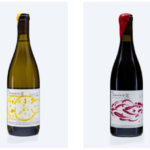
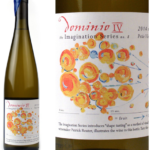
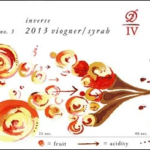
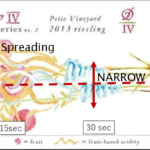
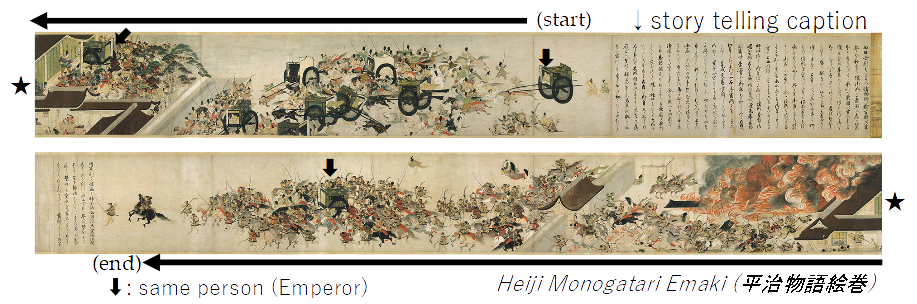
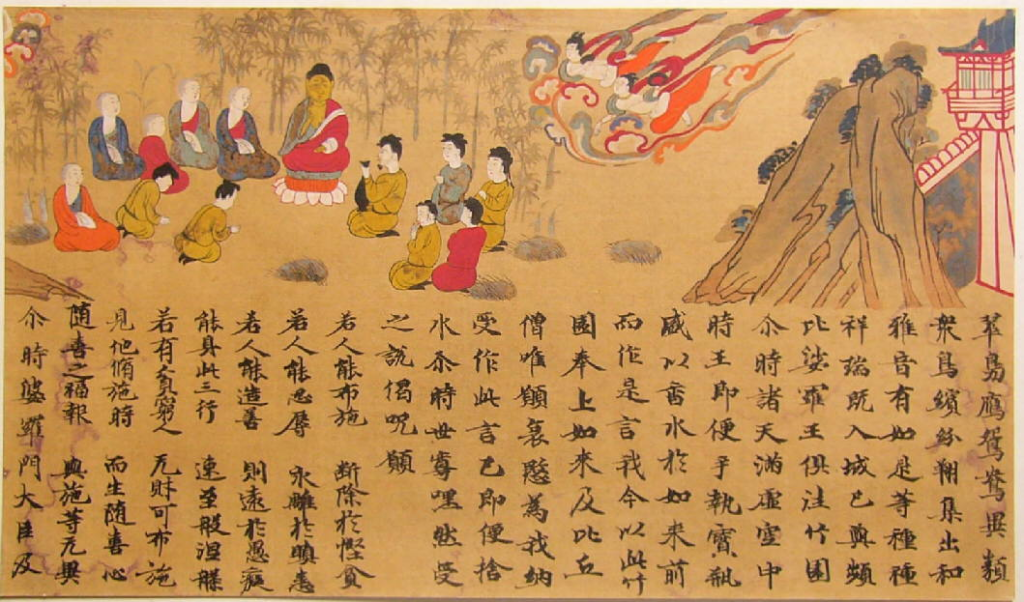
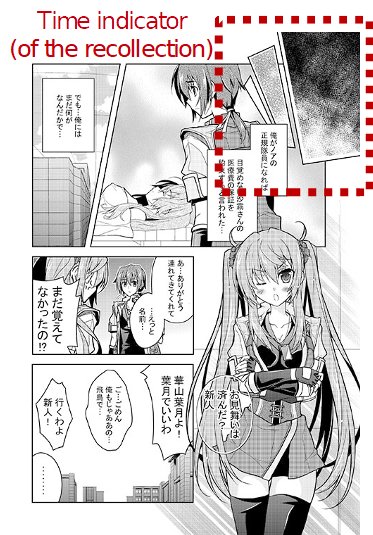
Efforts to express time on canvas
e.g., Manga and Emakimono (rolling scrolls)
Reading a handscroll can become an almost cinematic experience as the viewer scrolls through a narrative from right to left, rolling out one segment with his left hand as he re-rolls the right-hand portion.
Anna Willmann
What linear temporal concept lacks
線形時間では何が不足か
Limiting the description of taste from the moment it enters the mouth to the moment it is swallowed is an oversimplification and a trivialization of experience.
味わいの記述を,口の中に入ってから飲み込むまでに限定することは,行き過ぎた単純化,経験の矮小化である
Linear concept
Initial burst (Attack) —— Middle palate (Midpalate) —– After Flavor
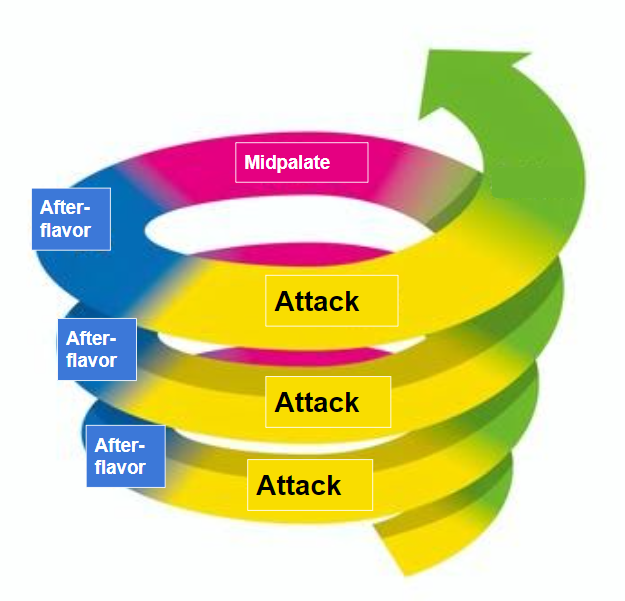
Non-Linear temporal forms
線形ではない時間
Various temporal structures
Dot(s) 点時間
Circle
Spiral
Reincarnation in Buddhism 輪廻
No temporal 空時間
KU 空 / Śūnyatā
It means the absence of the center, like doughnuts.
中心がない
Thus it lacks the concept of axis or origin or distance.
原点,距離がない
Existence and concepts are considered as relationships (karma), not as causation that has a center.
存在や概念は中心を持つ因果ではなく,関係性(縁起)として位置づけられる
The transcendence of distance, time, and space is characteristic in mandalas.
距離,時空間の超越性はマンダラに特徴的
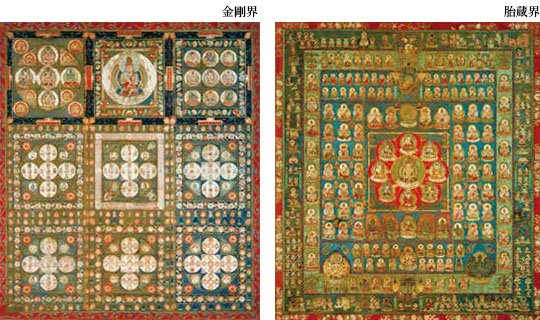
I don’t have time to fully explain the sky or mandalas in this 15min presentation..
So, let’s take a look at an example of a Japanese Sake label.
The artistic label below is one example of a Mandara-style description.
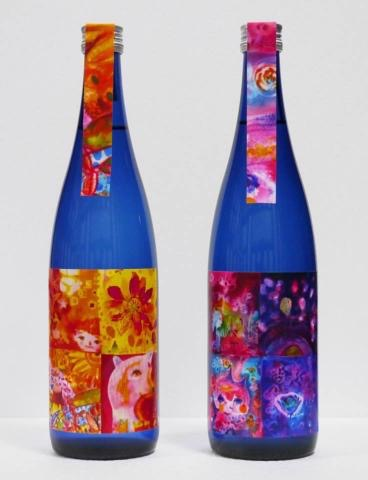
The label is consists of 5 parts of drawings (4 in the main label and 1 in the narrow label on the top of the bottle). 5つの絵の集合で,全体として酒の印象を描いている.
It is not clear which element in the drawings refers to what flavor of the sake.
Each part of the drawings represents a flavor unit of its own, and when the five drawings are seen together, they represent the unified flavor impression of the Sake as a whole.
The divisions of the drawings suggest a temporal sequence or phase, but the order and direction are not clear.
それぞれの絵は味のフェーズを表しているが,順序や時間軸は不明確(というか無い)
The movements of our eyes when we look at the pictures on this label do not necessarily follow a certain order or rule.
This is one expression of how to appreciate sake without centrality, equidistant in time, or distance.
時間的に等位であり,(胎蔵界)マンダラ的
Another Example of the KU time
(二)(三)(四)Gate-of-Four-Seasons-I-II-III-IV_壓克力、金箔、畫布-Acrylic-gold-leaf-on-canvas_2008-1024x835-1.jpg)
四季之門(一)(二)(三)(四)
Gate-of-Four-Seasons-I-II-III-IV
Acrylic, gold leaf on canvas, 2008, 1024×835 http://www.lianggallery.com/
Every section mutually includes the other three sections.
Compare with the wine description of Dominio4.
Conclusion: Toward the “Machine tasting” マシン・テイスティングにむけて
You might think that Oriental philosophy has nothing to do with computer science… BUT!!
東洋思想は計算機科学には関係が無い??
Ku, or the concept of the relationships [Engi] goes well with computer science.
空,縁起的関係性は計算機理論と相性がいい
Ontological relationships 存在論的関係性
Ontological relationships in Kegon Philosophy (a camp of Buddhism) (Izutsu, 2010)
The existence (or being) itself is Void ( Śūnyatā )
存在そのものは空
A concept that every thing (or object) exists only in relationships or “interconnectedness”.
すべてのものは相互関連性においてのみ存在する
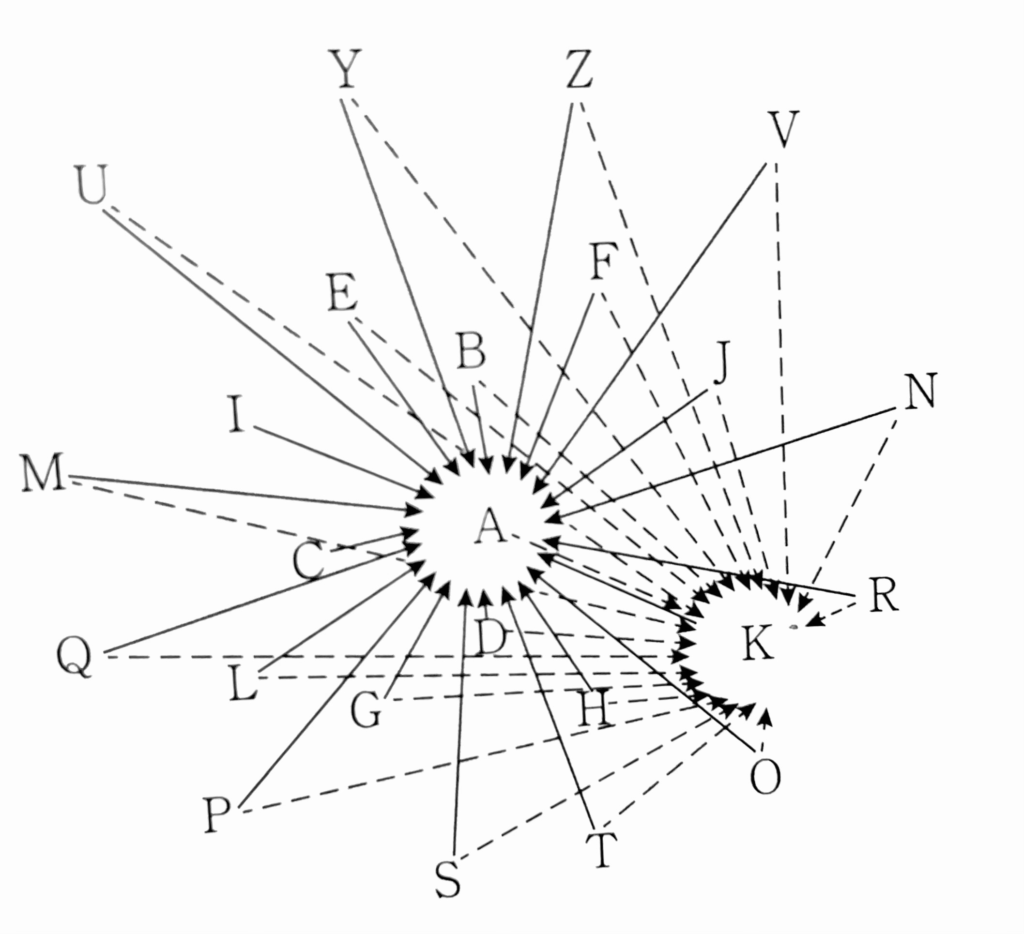
井筒俊彦『コスモスとアンチコスモス』
Ontological relationships (Engi) is familiar with some concepts of computer science;
MDS (Multi-Dimensional Scaling) 多次元尺度構成法
Mutual Information 相互情報量
Cooccuration analysis 共起分析, Word2vec, etc.
Last note for this presentation
Human taste perception based on Oriental Philosophy can be well applied to machines
東洋思想を土台にした人間の味覚認知の理解は,機械にも概念展開が可能で,相性がいい