Ernesto Neto
An artist who has made impressive use of natural scents to create olfactory environments intended to transport the audience into a different world is the Brazilian fabric sculptor, Ernesto Neto, who once packed long, diagonal legs of women’s sheer nylon stockings with the scents of spices such as cloves, cumin, and turmeric as part of the exhibition Wonderland at the St. Louis Art Museum in 2000. Some of the stockings stretched from floor to ceiling, others simply lay on the floor like sacks of colored powders. These nettings spread their scents throughout the museum space, creating a dreamy atmosphere that varied for each visitor depending on his or her associations with the odors
LARRY SHINER, YULIA KRISKOVETS, The Aesthetics of Smelly Art, The Journal of Aesthetics and Art Criticism, Volume 65, Issue 3, August 2007, Pages 273–286, https://doi.org/10.1111/j.1540-594X.2007.00258.x
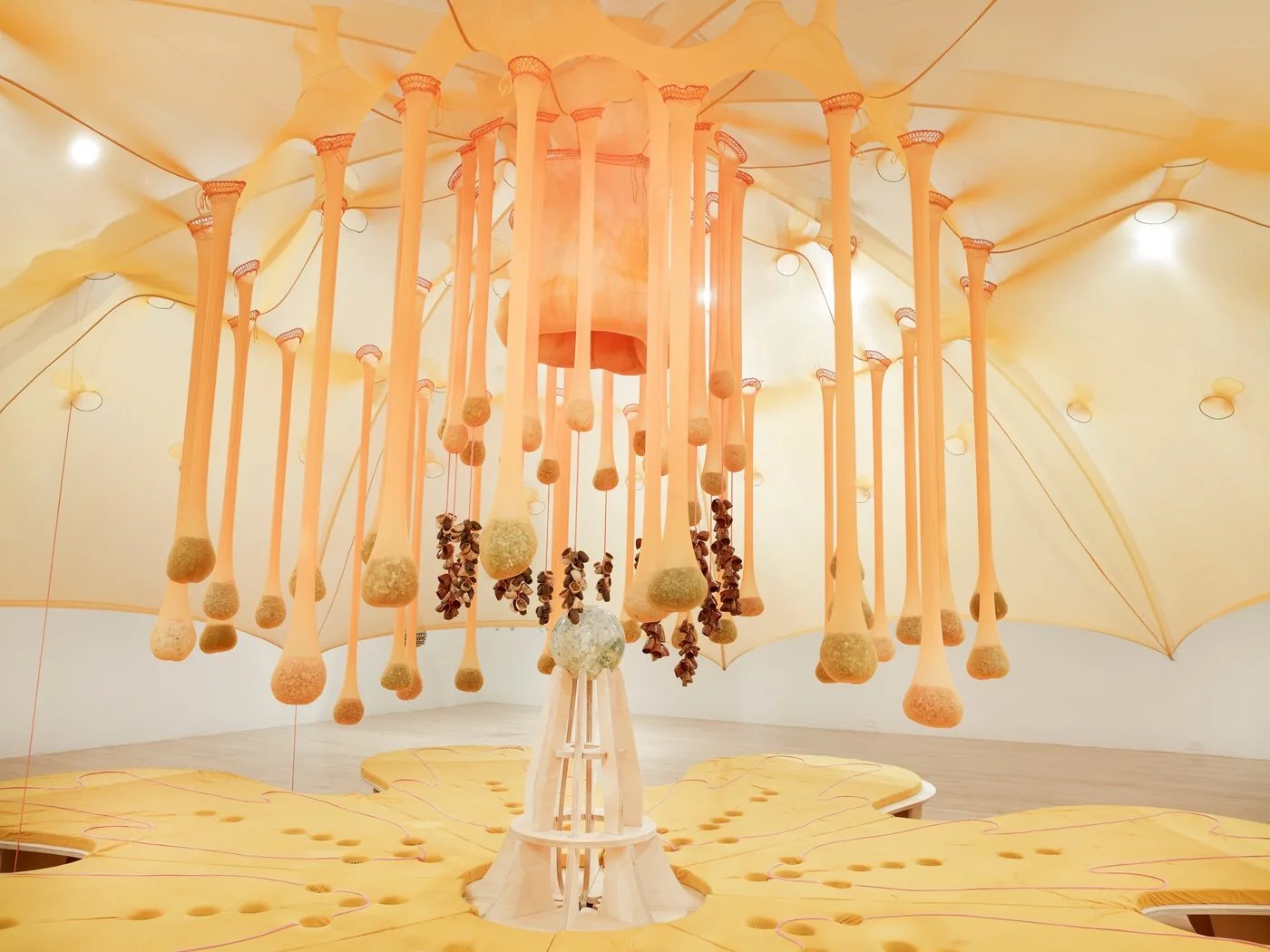
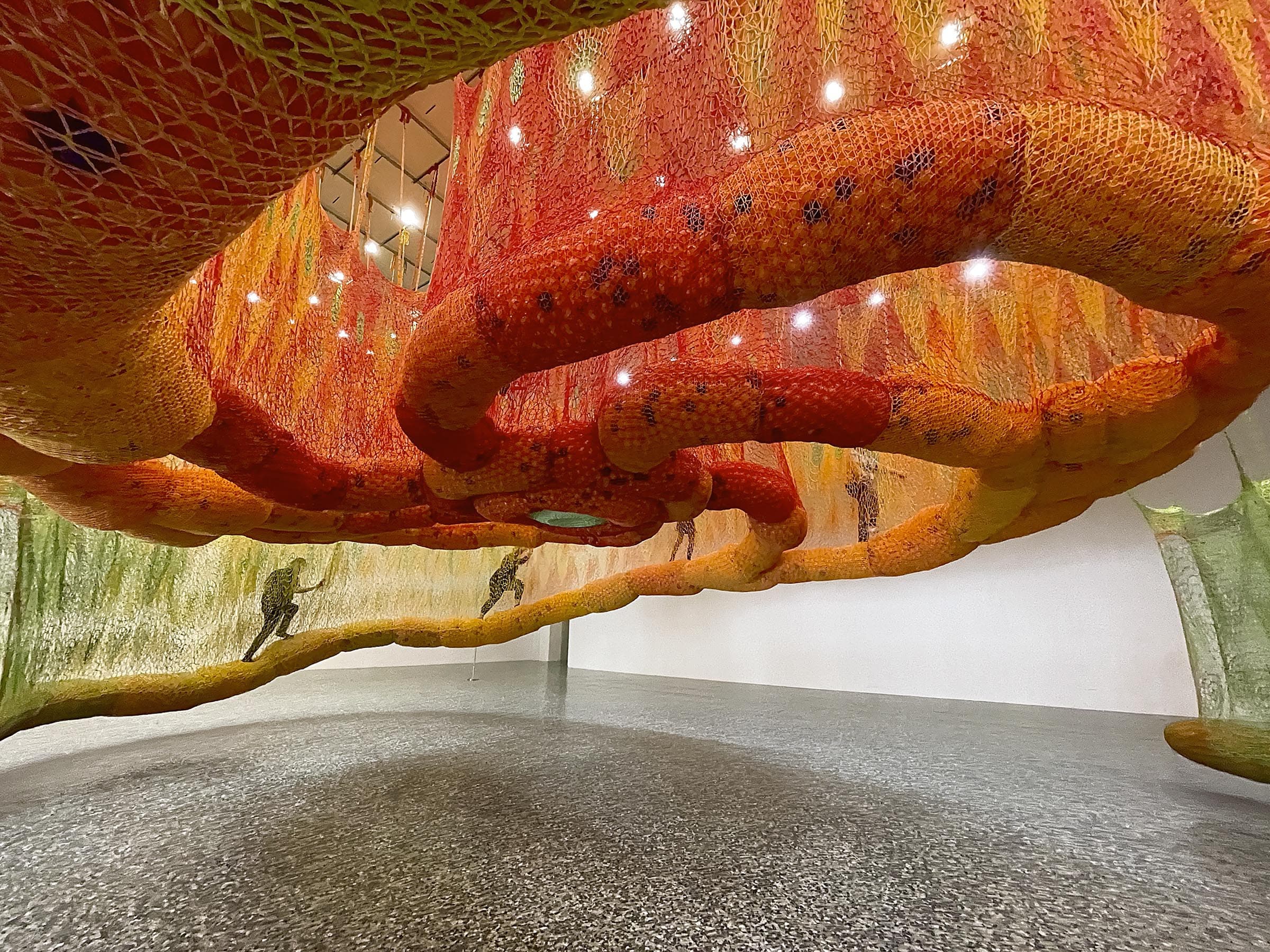
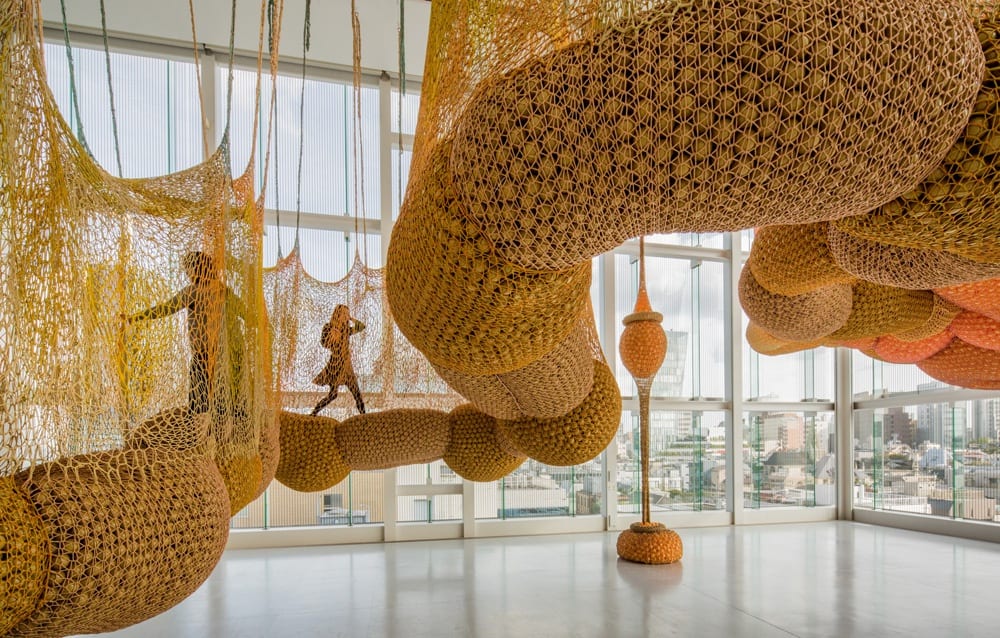
According to Jim Drobnick, “the enveloping presences” of artworks such as this “stem from a holistic viewpoint in which art can provide a haven for mending the fracture between mind and body.
Ibid.
Angela Ellsworth, Actual Odor
Actual Odor, Arizona State University Art Museum, Intervention, Tempe, Arizona (Performance)
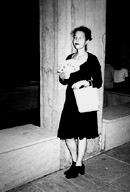
Two-hour Guerilla Performance – Reception for Muriel Magenta’s Token City
Arizona State University Art Museum Tempe, Arizona
For the duration of the opening reception Ellsworth wore a dress soaked in her own urine. For six days prior to the event the dress soaked. On the seventh day the dress was hung out in 110 degree weather to dry. While wearing the cocktail dress at the reception she cooled herself with an accessory fan which was stenciled with the word “actual” on one side and “odor” on the other. Ellsworth mingled casually with other exhibition viewers and for long periods of time sat quietly fanning herself in a close quartered installation space. Other times she positioned herself under hot spot lights in order to generate more heat form her body for the utmost odor. Exhibition visitors clearly caught whiffs of her dress but couldn’t determine from where the smell was coming.
Peter De Cupere
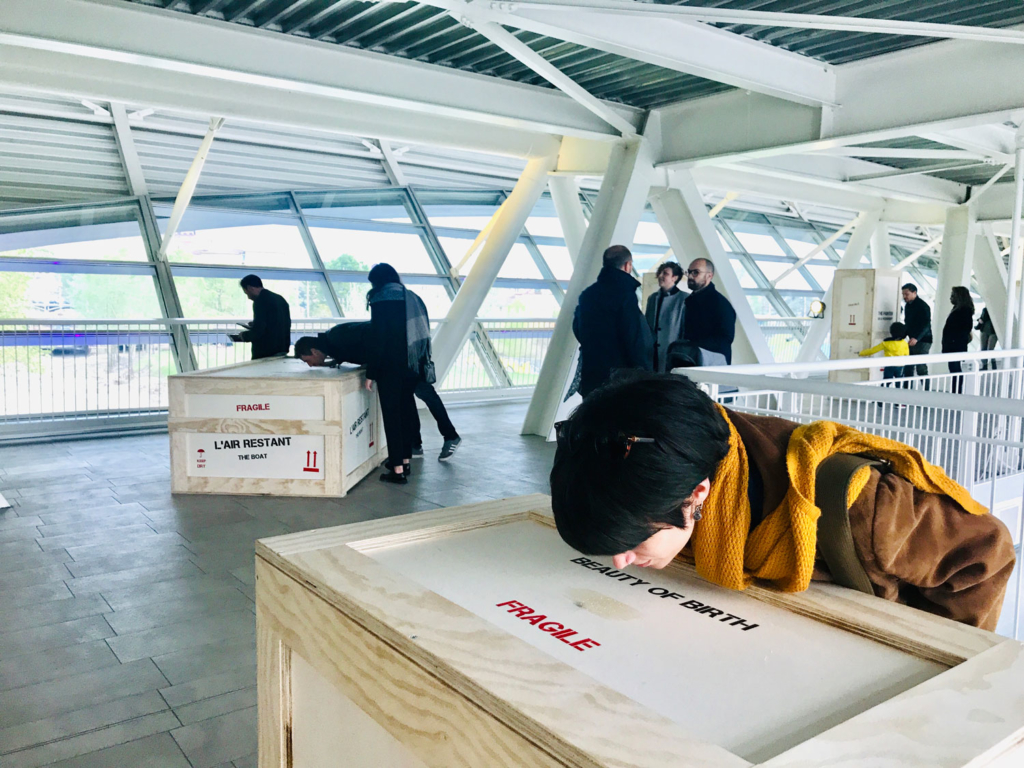
Olfactory Portraits is an olfactory journey that is structured in a sequence of wooden crates for transporting works of art, of different sizes, which contain perfumes or smells. Each case has its own title which refers to the fragrance contained within. The title, in combination with the smell, relates to a certain expressive context, to an object or a personality. For example, it is the case of the smell of the sea, of birth, of war, of breath, of “artist’s shit”. Every traveling crate, with the smell or smell inside it, becomes a work of art. What is not considered or said is that a perfume or an odor can also be a work of art, depending on the context and the purpose for which they were created. The artist invites the viewer to participate directly and empathize with the created situation, as the smells affect the limbic system, the intricate set of brain structures responsible for our emotional life and the formation of our memories.
http://www.peterdecupere.net/index.php?view=article&catid=1%3Aexhibition-news&id=202%3Aolfactory-portraits-in-parma-360-festival&format=pdf&option=com_content&Itemid=98
PhD Exhibition: When Scent Makes Seeing, When Seeing Makes Scents
300 works related to the use of smell as a concept and/or context of the work of art.
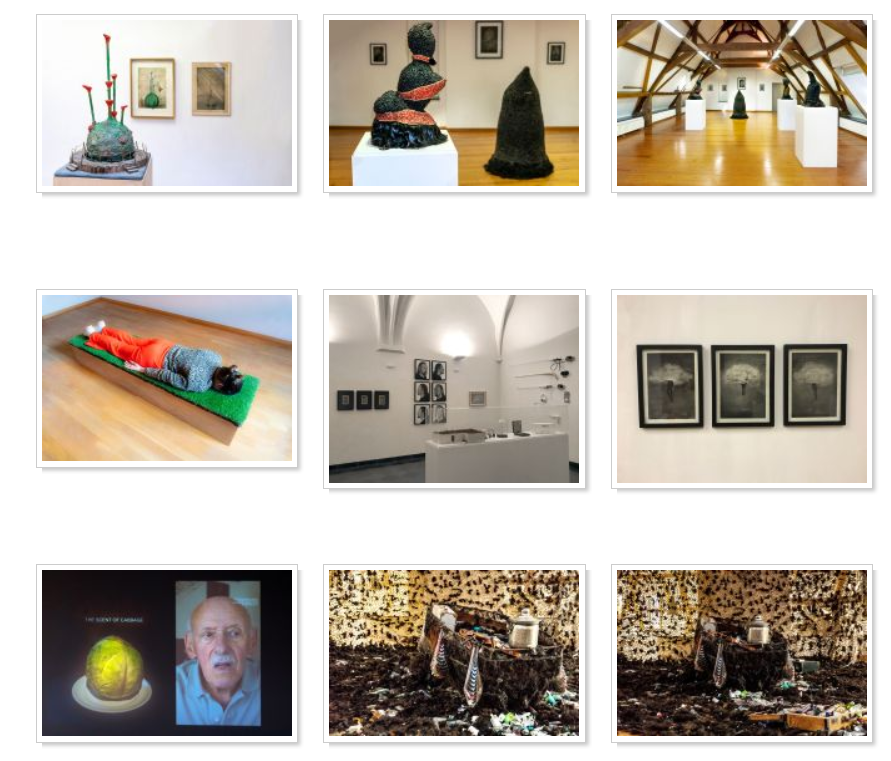
Peter de Cupere’s Stay Awake (Coffee Room Installation), commissioned by the Städtische Galerie Bremen (Germany) for the exhibition “Olfaktor: Geruch gleich Gegenwart” (2021)
Helgard Haug
https://www.rimini-protokoll.de/website/en/project/u-deur
An oudour-recipe – a formula – was developed, based on a specific smell analysis of the subwaystation Alexander Platz
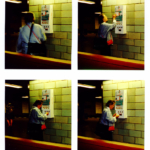
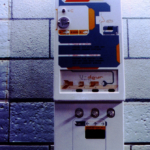
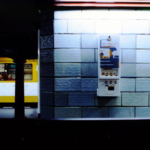
Each space has its own unmistakable odour.
https://www.rimini-protokoll.de/website/en/project/u-deur
An analysis of the smell in the U-Bahn Line 2 from Alexanderplatz was undertaken in April 2000 by a Perfumery. The odour-world as a whole was dissected into individual components. An odour-recipe, a formula, was developed from this walk along the train station.
This odour was synthetically reproduced in a laboratory.
The specific odour-landscape is dislocated from its origins and is made mobile.
The vending-machine is installed for a period of a year (from June 2000). Travellers can purchase the odour from this place where they find themselves. After leaving this place, this here and this now, it is possible, through the Perfum to re-enter this realm, to relieve, and to remember. In this way it is possible to transport this special place, the Underground Station U2, Alexanderplatz, and in every other space being able to “re-enter”.
Shioya Nobi
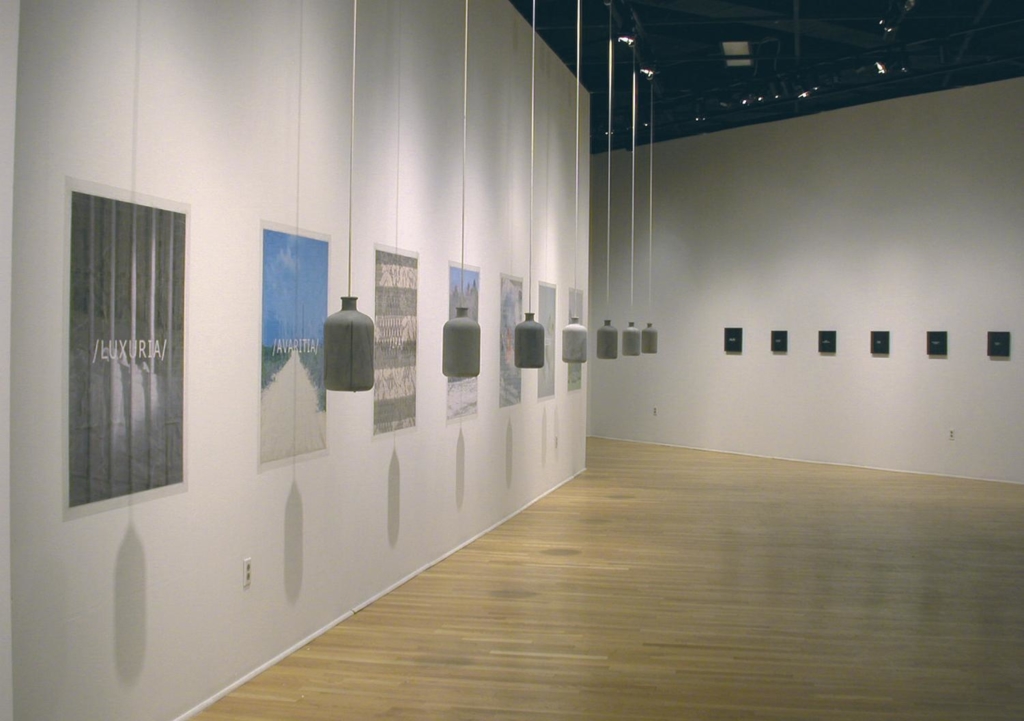
Nobi Shioya’s installation 7S (2003) consisted of seven large ceramic bottles suspended from the ceiling, each containing one of seven scents created by one of seven of the world’s top perfumers. Each perfumer was asked by Shioya to create an olfactory representation of a deadly sin: Pride, Envy, Anger, Sloth, Avarice, Gluttony, and Lust. The scents were accompanied by photos representing each sin hung on the walls of the gallery, with names of the sins in Latin. In addition to creating olfactory portraits of the seven deadly sins, the perfumers were asked by Shioya to create “self‐portraits” composed of scents. Each portrait consisted of a black panel saturated with scent and hung on the wall next to a smaller panel with the list of each perfumer’s most recognized commercial mass‐market scents. The large “self‐portrait” panel was also painted with the perfumer’s initials and a web site address where the visitors could learn more about this particular perfumer’s career.
LARRY SHINER, YULIA KRISKOVETS, The Aesthetics of Smelly Art
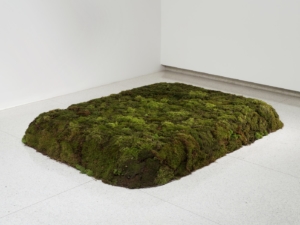
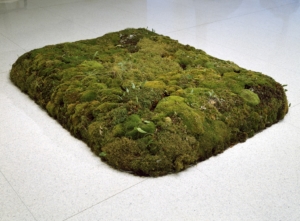
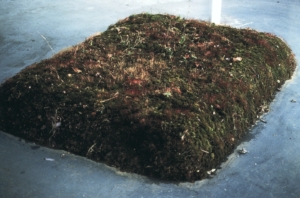
Meg Webster’s Moss Bed (1986, 2005/2015)
Valeska Soares, Fainting Couch, 2002.
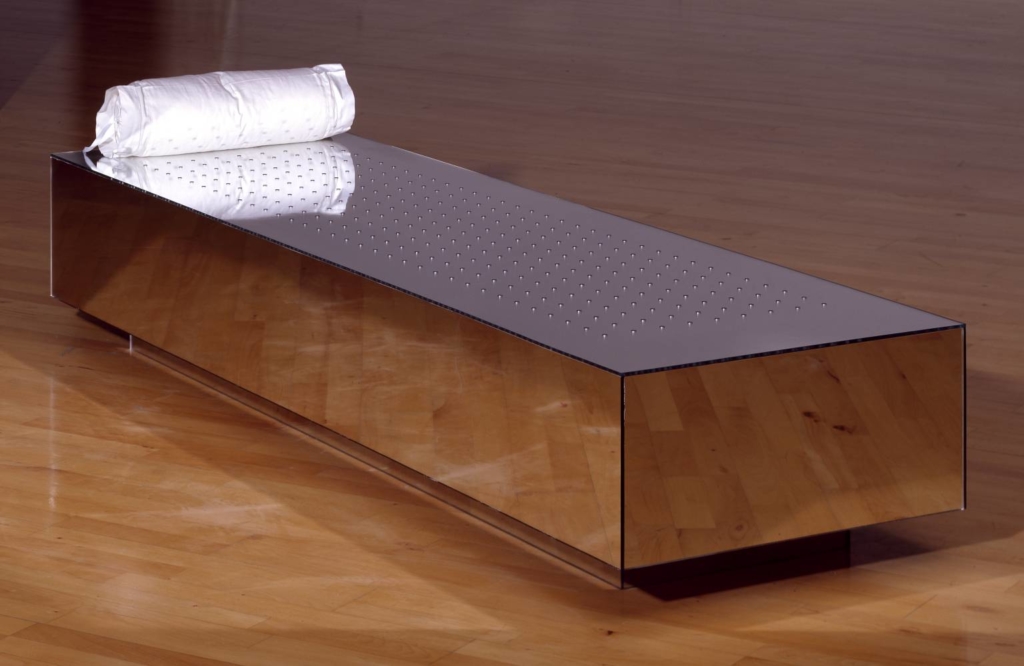
Valeska Soares’s Fainting Couch, with its geometric shape and highly reflective surface, seems at first to recall 1960s minimalism, in particular works by Robert Morris (born 1931) such as the mirrored cubes of Untitled 1965/71 (Tate T01535). Approaching the work, a grid of evenly spaced holes drilled in the surface of the object becomes apparent, as does a heady aroma that pervades the air around the work. The perfume is that of the Stargazer lily, a highly scented flower. Bunches of these lilies are concealed in drawers inside the couch and replenished as needed while the object is on display.
https://www.tate.org.uk/art/artworks/soares-fainting-couch-prototype-t11971